They Designed Your Life to Keep You Broke
Understanding the trap is the first step to escaping it. Here's what's really happening.
The Consumer Trap Was Built For You
Starting in the 1980s, the economic focus shifted from protecting workers to empowering consumers. The result: a culture of competitive spending, social isolation, and staggering debt. As Prof. Jiang Xueqin put it: "You will all go into debt, and you will all hate each other. That is consumerism."
The Hedonic Treadmill
You want something. You get it. For a week, it feels amazing. Then the feeling fades, and you need the next thing. The global marketing industry spends over $700 billion per year studying exactly how to keep you running on that treadmill — faster.
The Right Question
Stop asking "Can I afford this?" — that's the wrong question. The right question is: "Is this worth my time?"Because every dollar you spend is hours of your life you can never get back.
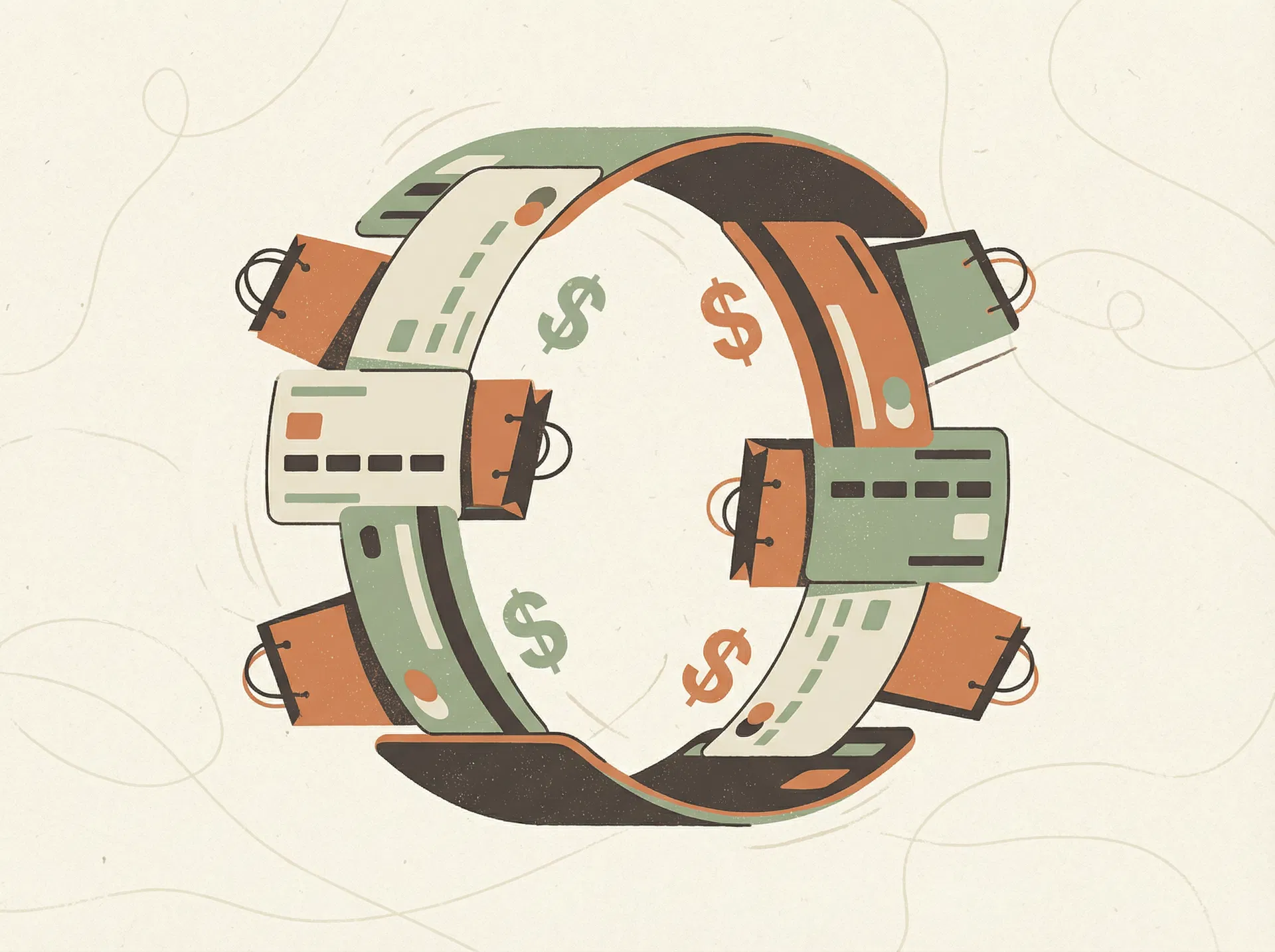
The earn-spend-wonder-repeat cycle is not a discipline problem. It's a trap.
What a $25/hr Earner Really Pays
At $25/hr take-home, here's what common purchases actually cost in life hours:
Your Life Hours Calculator
Enter your take-home hourly wage and the purchases you're considering. See exactly how many hours of your life each one costs.
Not sure? The US median take-home is roughly $20–$25/hr. Use your actual number for accuracy.
Unlock Your Free Calculator
Enter your email to access the Life Hours Calculator and get Rashida's free weekly money tips.
No spam. Unsubscribe anytime.
Quick add common purchases:
Total Life Hours Cost (Monthly)
hours of your life
= 1.8 work weeks · $1,849 total
💡 The real question isn't "Can I afford this?"
It's: "Is this worth 1.8 work weeks of my life?"
What If You Invested Instead?
See what happens when you redirect wasteful spending into a diversified index fund at a historical 8% average annual return.
- With 8% Growth
- Total Invested
Based on historical 8% average annual return. Markets fluctuate — past performance does not guarantee future results. For educational purposes only.
The $750/month car note example from the video:
One car payment, invested instead of spent, over 30 years at 8% avg return.
That's not a promise. That's the documented, historical power of consistent long-term investing.
3 Moves to Take Your Life Back
Not theory. Specific actions you can take this week to start escaping the consumer trap.
Audit the Leak
Pull up your last 3 months of bank and credit card statements right now — not later. Go line by line. Highlight every recurring charge, subscription, automatic renewal, and forgotten membership.
Action: Ask yourself one question about each: "If this disappeared tomorrow, would I even notice?"
Most people find $100–$300/month in spending they had completely forgotten about. That's your starting capital.
Build Your "No" Fund
Most people stay trapped not because they don't know what to do, but because they can't afford to say no. They can't leave the bad job. They can't walk away from the bad deal.
Action: Start with $1,000. Then $2,000. Build toward 3–6 months of living expenses in a high-yield savings account.
When you have that cushion, your entire relationship with money and work changes. You have options. And having options is what real freedom actually feels like.
Invest Like Your Freedom Depends on It
Every dollar you invest is not just a number growing in an account. It's a piece of your future that you are buying back.
Action: Start with your employer's 401k match (that's an instant 50–100% return). Then open a Roth IRA. Contribute what you can. Keep building.
The goal is not to stop living. The goal is to stop funding someone else's freedom with your labor while yours slips away.
Picture a Tuesday Morning.
You wake up and the first thought in your head is not "what do I have to do today." It's "what do I want to do today." Not because you won the lottery — because you made a series of quiet, consistent decisions that built something nobody can take from you.
You own your time.